OGF Essays
Relational Spaces
Essays on the OGF and its relationship to established approaches to organizational alignment, strategy, and performance.
The OGF essays draw on qualitative findings and propositions from a developing framework. Phase 2 will examine the OGF quantitatively, so the ideas presented here are not settled causal claims.

OGF in Context
Comparing frameworks for organizational alignment.
These essays place the OGF alongside established approaches and examine the different questions each framework is designed to answer.

OGF in Context · McKinsey 7S
Two Views of Organizational Alignment
How a broad organizational map and a relational diagnostic lens can complement one another.
Read the comparison
OGF in Context · Balanced Scorecard
Measuring Performance and Diagnosing Misalignment
How performance measurement and relational diagnosis can work together without performing the same job.
Read the comparison
OGF in Context · Gap Analysis
Measuring the Distance and Diagnosing the Relationship
How gap analysis and relational diagnosis can work together to move from a visible shortfall toward its organizational source.
Read the comparison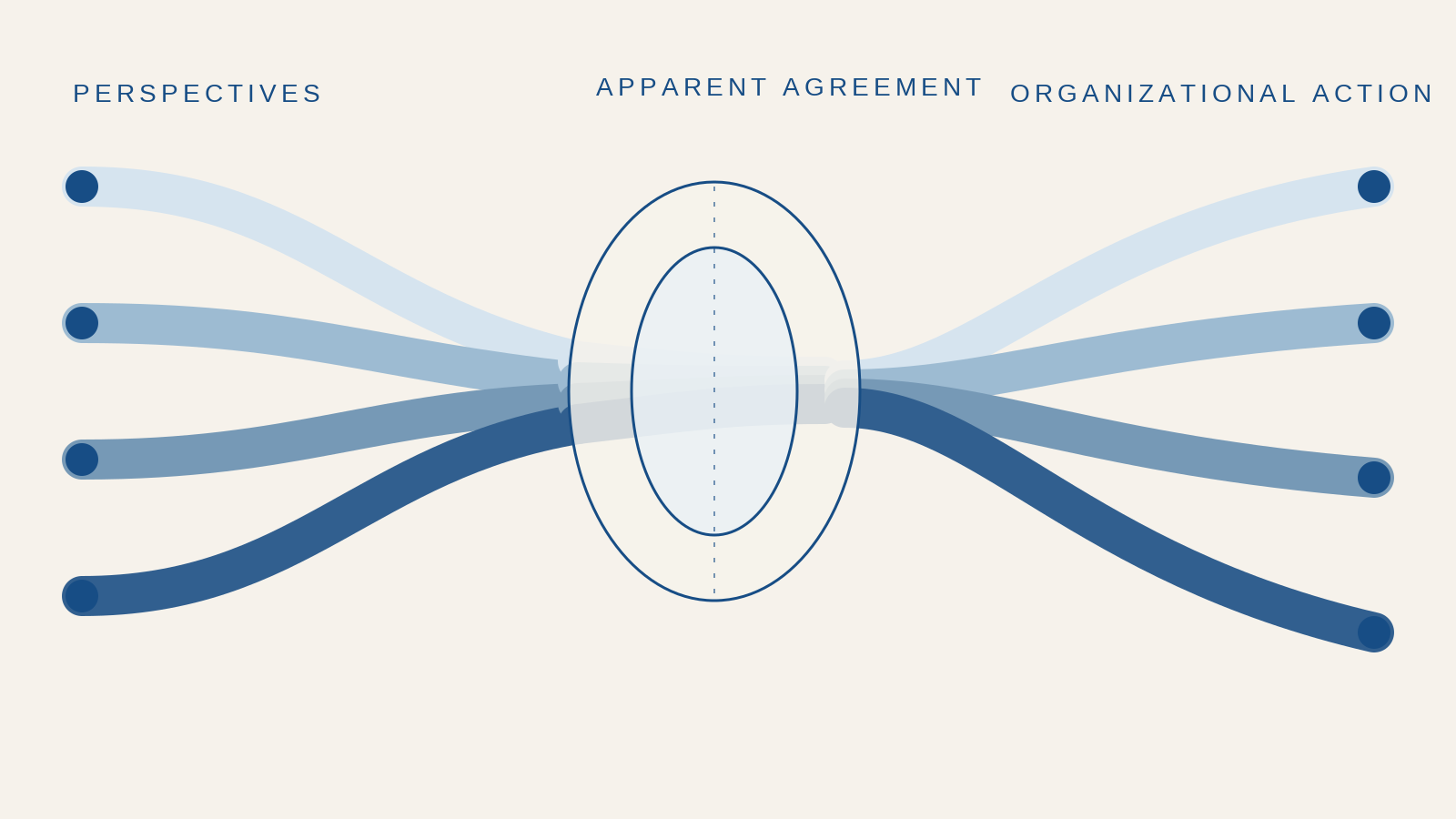
OGF in Context · Strategic Consensus
Why Agreement Does Not Guarantee Organizational Alignment
How consensus, shared understanding, and the Alignment Illusion address related but different organizational questions.
Read the comparison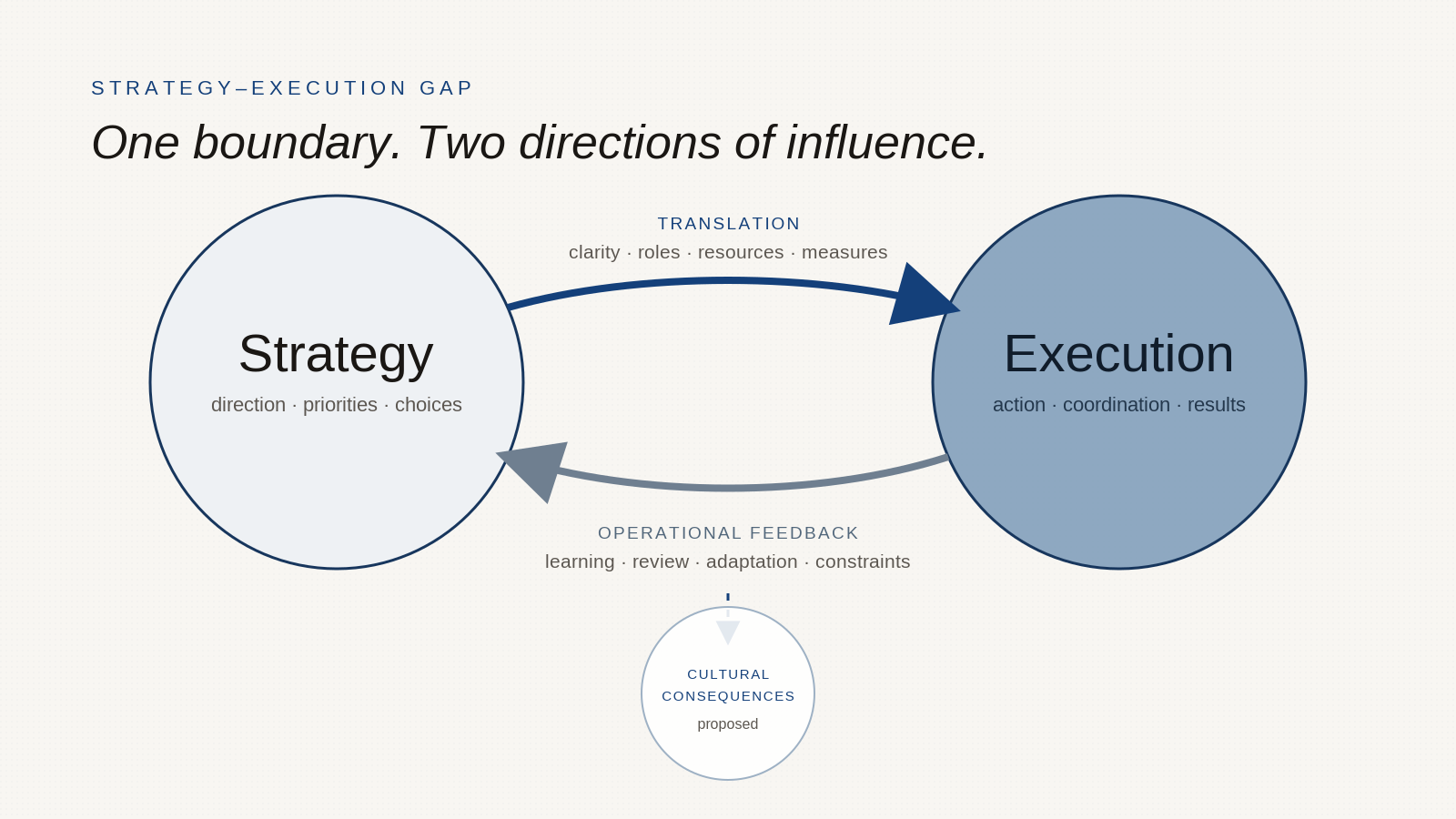
OGF in Context · Strategy–Execution Gap
What Is the Strategy–Execution Gap?
How established strategy-execution guidance and a relational diagnosis can work together to identify which side of the connection needs attention.
Read the article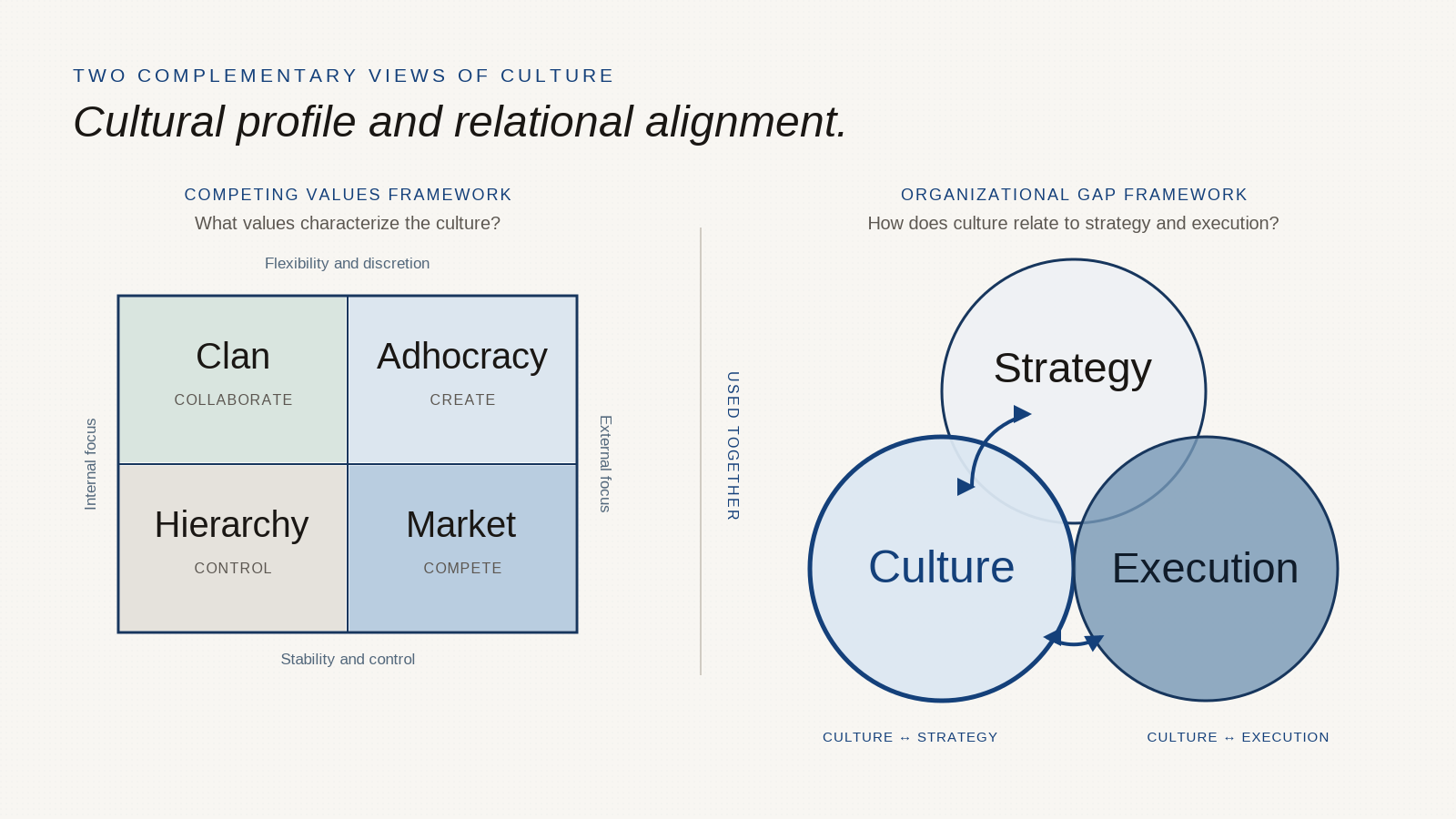
OGF in Context · Competing Values Framework
Understanding Culture and Its Organizational Relationships
How the CVF and OGF can help leaders examine both cultural values and culture’s relationships with strategy and execution.
Read the comparisonUnderstanding the OGF
Twelve essays on organizational gaps.
Each essay explains one part of the framework and ends with questions for leadership teams.
What If Nothing Is Wrong With Your Strategy Execution or Culture
Why misalignment often lives in the relationships between otherwise credible organizational domains.
Read the essay → 03When Strategic Intent Fails to Become Organizational Action
What can be lost as strategic intent moves into day-to-day organizational action.
Read the essay → 04What Your Operating System Teaches People to Value
How systems for managing work can contradict the culture an organization claims to hold.
Read the essay → 05When Strategy Conflicts With Who the Organization Believes It Is
Why new strategic direction may collide with organizational identity and inherited assumptions.
Read the essay → 06Strategy Execution Alignment Runs in Two Directions
Why strategy–execution alignment requires both translation and credible operational feedback.
Read the essay → 07Execution and Culture Are Constantly Rewriting Each Other
How formal systems and informal norms may continually reshape one another.
Read the essay → 08The Two Way Relationship Between Strategy and Culture
How leaders connect strategy to identity, and how culture affects which strategies seem credible.
Read the essay → 09Why Bad News Weakens as It Travels Upward
How reasonable choices at each layer can produce a version of reality that feels coherent at the top.
Read the essay → 10When Visible Agreement Hides Behavioral Divergence
Why the signals leaders interpret as alignment may reflect compliance rather than commitment.
Read the essay → 11Why the Visible Problem May Not Be the Root Problem
Why the most visible organizational problem may not be the relationship where the trouble began.
Read the essay → 12What to Ask Before Launching Another Organizational Intervention
A practical way to examine the relationship before responding to the visible symptom.
Read the essay →